5 Best Sustainable Mailers for Online Retail Packaging
/Most online retailers don't realize they're paying a price twice: once for the mailer itself, and again in customer trust when the packaging doesn't match the brand's eco-claims. Choosing the best sustainable mailers means sorting through real certification confusion, greenwashing claims, and the genuine tension between keeping products safe in transit and keeping your carbon footprint low. After reviewing dozens of packaging providers across certifications, materials, and real-world durability, this guide covers five options worth your attention.
The research approach for this ranking
Public information drove every decision here. Review platform data, official product pages, customer case studies, and directory listings were all pulled together to evaluate each company. Only providers with a real, demonstrated track record in sustainable packaging made the final cut.
→ See the full research breakdown
● EcoPackables - Best for certified eco-friendly shipping options and custom eco-friendly mailers
● Packhelp - Best for custom eco-friendly packaging for e-commerce and shipping
● Packwire - Best for custom corrugated box packaging for e-commerce and retail
● noissue - Best for eco-friendly custom packaging for brands and creators
● Packlane - Best for custom packaging and box design for small to enterprise orders
Why Sustainable Mailers Matter for Your Business
Picking the right mailer isn't just an environmental choice. It's a business decision that touches your shipping costs, your brand perception, and your legal exposure under FTC Green Guides.
The real challenge is that "eco-friendly" means something different on almost every product page. You've got mailers claiming compostability without ASTM D6400 backing, recyclable claims with no How2Recycle certification, and recycled content percentages that don't specify post-consumer recycled (PCR) levels.
Sustainable materials often cost more upfront than conventional plastic mailers. That gap is real, and it takes honest volume planning to close it.
But the right choice does pay off. Mailers with verified PCR content cut your carbon footprint per unit shipped without sacrificing protection. Certified compostable options give customers a clear end-of-life path. And knowing whether your mailer is industrial compostable versus home compostable actually matters for the promise you're making to buyers.
Top 5 Sustainable Mailers Breakdown and Comparison
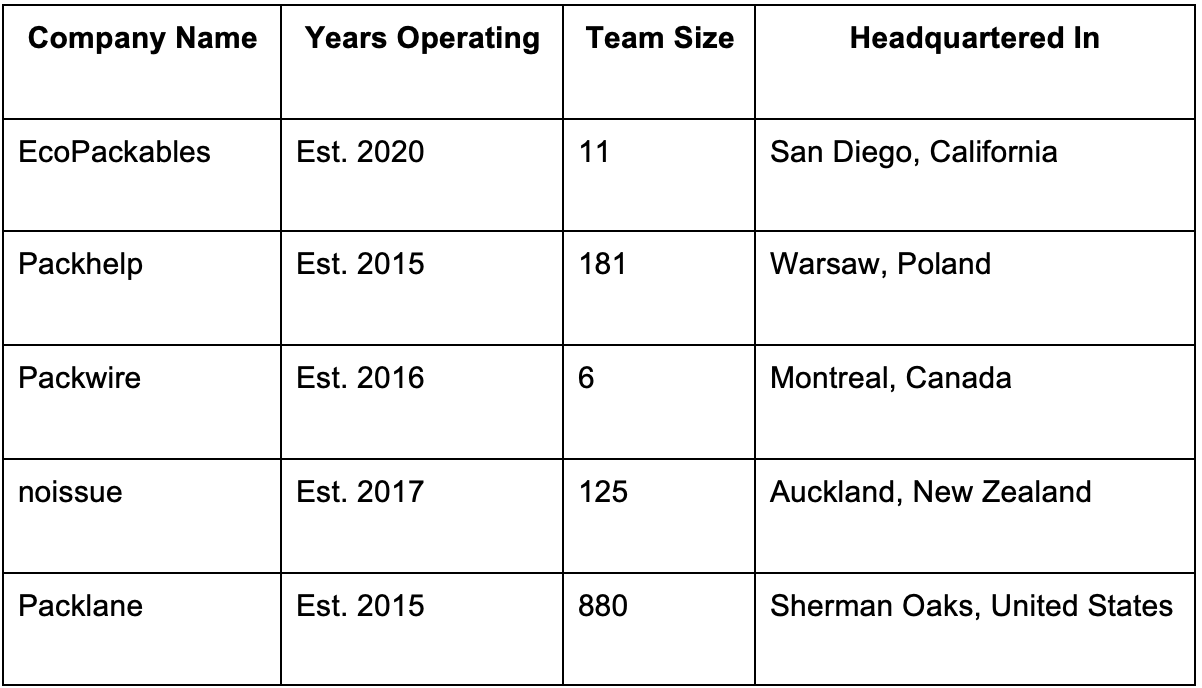
Note: All data in this table is sourced from review platforms and the official websites of the listed companies.
1. EcoPackables - Best for Certified Sustainable Mailers and Custom Eco-Friendly Packaging
What Does EcoPackables Do?
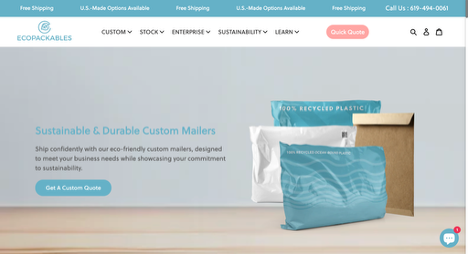
EcoPackables works exclusively in sustainable packaging, which is rarer than it sounds. Founded in 2020 and based in San Diego, they supply certified recyclable, compostable, and recycled-content mailers, poly bags, padded mailers, boxes, and void fill to over 10,000 brands across North America. What sets them apart is their in-house material development: BioLaminate™ and Renewa™ are proprietary materials backed by third-party life cycle assessments. Production lead times start as low as 25 business days, and they handle compliance management alongside the physical product supply.
Why Does EcoPackables Stand Out for Sustainable Mailers?
Brands dealing with certification confusion and greenwashing pressure need a supplier who handles the verification side for them, not just the printing. EcoPackables is a Certified B Corporation with Yale Center for Business and Environment recognition, including the Sabin Sustainable Venture Prize, which means their eco-friendly claims come with real backing. That builds trust well beyond what a typical packaging supplier can offer.
Summary of Real User Reviews:
From what the reviews show, brands working with EcoPackables consistently point to the depth of certification support as a standout. Customers also note that working with a team entirely focused on sustainable materials means fewer back-and-forth conversations about what's actually compostable versus what just looks green. For DTC brands trying to close the gap between their values and their packaging, that focus matters more than most expect.
2. Packhelp - Best for Custom Sustainable Packaging with Low Minimums and Fast Turnaround
What Does Packhelp Do?
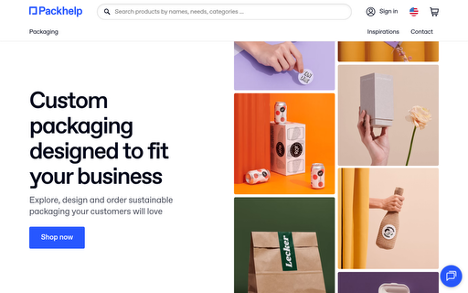
Packhelp is a custom branded packaging marketplace based in Warsaw, Poland. Founded in 2015, they've grown to serve 50,000 customers across 30+ countries, including BMW, H&M, and Google. Their platform lets you design packaging in under five minutes using a 3D visualization tool, with instant quote generation on wholesale quantities. Minimum orders start at just 30 pieces, and delivery typically lands within 14 days. They cover mailer boxes, biodegradable mailers, and a full range of sustainable packaging formats.
Why Does Packhelp Stand Out for Sustainable Mailers?
The biggest friction point for small brands ordering custom sustainable packaging is usually the combination of high minimums and slow quotes. Packhelp removes both at once. Their Deloitte Technology Fast 50 Central Europe ranking and $67.6M in funding signal they're not just a startup experiment but a scaled operation with staying power (not the cheapest at enterprise volume, but worth it for speed and flexibility).
Summary of Real User Reviews:
Customers regularly mention how fast the design-to-order process moves compared to traditional packaging suppliers. The 3D preview tool gets specific praise because it removes guesswork before committing to an order. From what the reviews show, the main consideration for buyers is pricing at higher volume tiers, where specialist suppliers can sometimes close the gap.
3. Packwire - Best for No-Setup-Fee Custom Corrugated Mailers with North American Production
What Does Packwire Do?
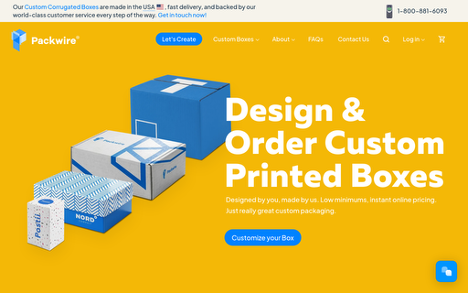
Packwire is a Montreal-based packaging company founded in 2016, built on over 70 years of packaging experience. They specialize in custom corrugated boxes and branded mailers made in the USA, using UV-curable inks and laser precision cutting with no plates, dies, or tooling fees. Minimum orders start at just 10 boxes, and pricing runs around $3.76 per box at 250 units. Delivery typically takes 10 to 20 days. They serve everyone from early-stage startups to Fortune 500 companies, which is a wider range than most packaging shops manage.
Why Does Packwire Stand Out for Sustainable Mailers?
Setup fees and design change costs have historically locked small brands into designs that no longer fit. Packwire eliminates that entirely with their no-fee model. North American manufacturing also means shorter supply chains, which directly cuts the carbon footprint per unit shipped compared to overseas production. That's a real environmental benefit, not just a marketing line.
Summary of Real User Reviews:
Brands that have worked with Packwire point to the low minimum order quantity as a genuine differentiator, especially for teams testing new packaging designs before scaling. The no-setup-fee structure gets mentioned often because it changes the economics of design changes. For businesses that need to move fast on packaging without committing to large runs, this setup is hard to match.
4. noissue - Best for Sustainable Custom Packaging for Independent Brands and Creators
What Does noissue Do?
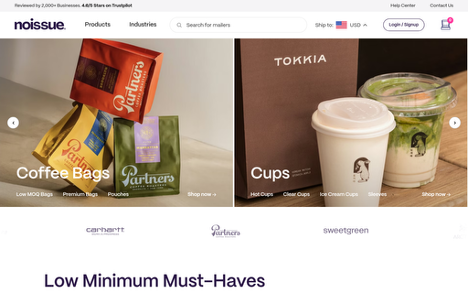
Noissue is an Auckland-based sustainable packaging company founded in 2017, serving over 80,000 customers globally with a team spread across seven countries. They focus on custom eco-friendly packaging made from compostable, recycled, or reusable materials, covering tissue paper, stickers, tape, stamps, mailers, and branded cards. All tissue is FSC Certified and uses soy-based ink. Their design platform keeps things simple, and they ship worldwide within three weeks with free shipping included. Brands like Allbirds, Sunday Riley, and Aesop are on their client list.
Why Does noissue Stand Out for Sustainable Mailers?
Independent brands and creators often get pushed toward minimum orders that don't fit their actual volume. Noissue built their model around smaller, more accessible runs without dropping material quality. Their 200% growth across North America during a period when supply chains were under serious strain shows they can actually deliver on the promise at scale.
Summary of Real User Reviews:
From what the reviews show, customers talk most about how approachable the design process is, especially for founders who don't have a packaging background. The FSC certification and compostable materials get mentioned as specific trust signals that help brands communicate their values clearly to customers. The worldwide delivery with free shipping also comes up regularly as something that removes a real logistical headache.
5. Packlane - Best for Custom Packaging with No Minimum Order Requirement
What Does Packlane Do?
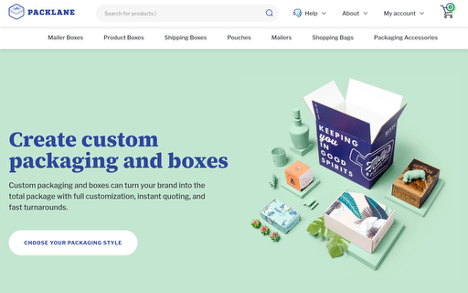
Packlane is a Sherman Oaks-based custom packaging platform founded in 2015 with a team of 880. They offer mailer boxes, product boxes, shipping boxes, pouches, and accessories with a fully online 3D design studio that updates pricing in real time as you build. The standout is their minimum order quantity of one unit, which no comparable competitor matches. Full-color digital printing delivers edge-to-edge graphics without plate fees. Their client list includes Google, Red Bull, The New York Times, and Shopify, so they're clearly operating at serious scale (think enterprise capacity, but accessible to anyone).
Why Does Packlane Stand Out for Sustainable Mailers?
Brands that need to test packaging concepts before committing to volume runs have historically had to accept high minimum orders or pay premium sample fees. Packlane removes that barrier completely. Being trusted by over 10,000 brands, including major names across tech and media, means their quality at low quantities holds up where it counts.
Summary of Real User Reviews:
Customers consistently point to the MOQ-of-one promise as the feature that sets Packlane apart, especially during product launches or seasonal campaigns where flexibility matters most. The real-time pricing tool gets strong mentions for making the budget conversation straightforward. From what the reviews show, the design studio experience stands out as one of the cleaner ones in this space.
Research Methodology and Selection Process
The goal was a list that reflects what actually works in sustainable packaging, not just what ranks well in directories. That meant starting broad and narrowing down based on real evidence.
Initial Data Collection
The process began by pulling from multiple sources at once: packaging-specific directories, product review platforms, supplier databases, and the official websites of companies actively operating in sustainable mailers. The aim was a wide initial pool covering a range of company sizes, regions, and material specializations. Companies were flagged if they appeared consistently across multiple credible source types, since that cross-platform presence often signals a company that real buyers have actually used.
Shortlisting Phase
From that wider pool, options without verifiable track records were removed early. This meant cutting companies whose review patterns were thin, inconsistent, or impossible to trace back to genuine buyers in the packaging space. The shortlisting also looked at how long each company had been operating and whether their stated specialization in sustainable materials matched what showed up in real customer feedback. Vague eco-claims without material specifics were treated as a red flag during this phase.
Verification of Claims
Each shortlisted company's claims were checked against what third-party sources and customers actually reported. A company saying they offer compostable mailers is one thing. Customers mentioning specific certifications, material performance in transit, and real compostability timelines is a different standard entirely. Where a company's site made strong environmental claims, those were cross-referenced against review content and any publicly available certification documentation.
Authority and Industry Contribution Layer
Companies that contribute to the broader conversation around eco-friendly packaging carry more weight than those that simply sell a product. This layer checked for award recognition, mentions in important publications, original research or material development, and industry partnerships. EcoPackables' B Corp certification and Yale recognition, Packhelp's Deloitte ranking and funding history, and noissue's growth metrics during a difficult supply period all factored into this evaluation.
Sustainable Mailers-Specific Evidence
The final check focused on sustainable mailers as a product category. Companies needed dedicated service or product pages for this category, verified customer reviews referencing mailer performance, and at least some evidence of repeat business or brand partnerships in the e-commerce or DTC space. Generic packaging companies that happened to list a mailer SKU didn't make the cut. The five companies here all showed clear, consistent evidence of operating meaningfully in this specific space.
How to Choose the Right Sustainable Mailers
Picking a sustainable mailer supplier involves more than finding the lowest cost per unit. Here's what actually matters when you're evaluating your options.
● Industry/Domain Experience: Look for suppliers who focus on sustainable materials, not just companies that added an eco line to a conventional catalog. Depth of material knowledge shows up in certifications, in how they answer questions, and in whether their products hold up in real transit conditions.
● Features and Service: Check whether the supplier offers compostable, recyclable, and recycled-content options, or just one. Having access to multiple material types lets you match the right mailer to each product category without switching suppliers.
● Pricing Structure: Compare cost per mailer at your actual volume tier, not the headline rate. Factor in minimum order quantities, setup fees, and whether samples are available before bulk ordering.
● Results Measurement: A good supplier should be able to give you data on PCR content percentages, carbon footprint per unit, and compostability timelines. If they can't provide that detail, the eco-claims are hard to verify.
● Industry Knowledge and Compliance: FTC Green Guides, ASTM D6400, FSC certification, and How2Recycle labeling aren't optional for brands making public environmental claims. Your supplier should know these standards and be able to help you stay on the right side of them.
Bottom Line
Sustainable packaging is no longer a nice-to-have for online retail. It's a measurable part of how customers evaluate brands before and after the purchase. The five companies covered here each bring something distinct to the table, from EcoPackables' certified materials and B Corp standing to Packlane's single-unit flexibility. The right fit depends on your volume, your certification requirements, and how much your packaging needs to carry your brand story. As buyer expectations around verified eco-claims keep rising, getting this decision right early matters.

