
Best POS Systems for Restaurants in 2026
/Switching POS systems mid-service is a nightmare most operators know too well. POS Systems for Restaurants have come a long way, but picking the wrong one still means slow transaction processing times, staff confusion during busy rushes, and revenue lost to system crashes at the worst possible moment. After reviewing dozens of platforms across setup time, feature depth, and real operator feedback, this guide covers five options that actually hold up under the pressure of daily food service operations.
How the picks were chosen
Each option was researched using publicly available material: feature pages on official websites, operator reviews across third-party platforms, and case studies showing real outcomes in food service settings. Only platforms with a documented track record in restaurant technology made the list.
→ See the full research breakdown
Orders.co - Best restaurant POS for direct ordering and commission-free revenue
Clover - Best for small to mid-size restaurants and food service establishments
Soft Touch - Best for restaurant POS and payment processing
Shift 4 Dine - Best for full-service restaurants and multi-location restaurant groups
Toast - Best for independent and small restaurant chains
Why POS Systems For Restaurants Are Worth the Investment
Choosing the right POS system is one of the most consequential decisions a restaurant operator makes. The wrong pick shows up fast: retraining staff after every update eats into already thin labor budgets, and a single crash during a Friday dinner rush can wipe out hours of revenue in minutes.
Restaurants carry pressure points that most general business software doesn't account for. Split checks, custom modifiers, kitchen routing, and tip reporting all need to work without friction, every single shift.
Well-chosen POS Systems for Restaurants address those pain points at the root. They cut order error rates, keep transaction processing moving at a pace guests don't notice, and give operators the reporting they need to spot problems before they compound. The right system means faster table turns, cleaner close-outs, and staff who actually know how to use the tools in front of them.
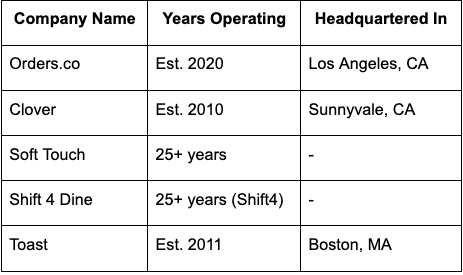
POS Systems For Restaurants Comparison Table
Note: All data in this table is sourced from review platforms and the official websites of the listed companies.
1. Orders.co - Best Restaurant POS for Direct Ordering and Commission-Free Revenue
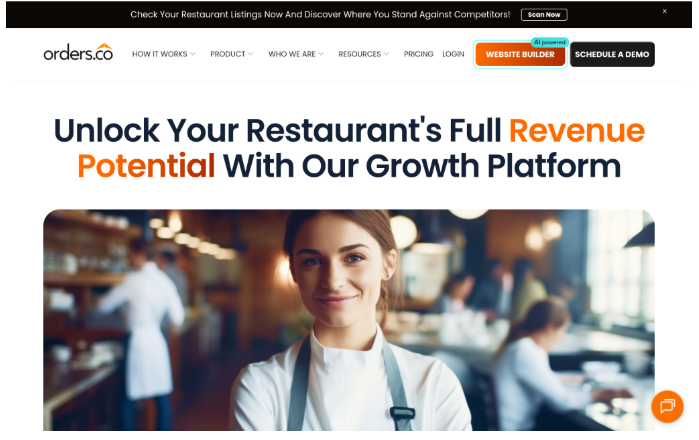
Where Does Orders.co Operate and What Is Its Purpose?
Orders.co is a cloud-based restaurant POS headquartered in Los Angeles, built on the idea that restaurants shouldn't hand a cut of every digital order to a third party. Every account includes a commission-free ordering website, while UberEats, Grubhub, ezCater, and DoorDash orders still flow into the same dashboard as phone, dine-in, and direct tickets. One screen, no shelf of provider tablets. What comes with it:
A commission-free ordering website, loyalty, and automated marketing — all included, giving operators a channel they own plus the tools to keep guests returning
Order consolidation and real-time menu sync — every channel in one queue, and one edit reaches all of them
KDS and table-side Dine-In Express ordering — kitchen routing and table-side ordering built in
X and Z shift reports, top seller data, and provider performance tracking — clean close-outs plus visibility into provider performance, with payout details available through each delivery provider’s own reports. Flexible delivery dispatch, fast dispute management, and a catering module — route deliveries your own way, recover 3rd-party delivery app disputed orders, and handle catering on its own flows
What's Orders.co's Edge in POS Systems For Restaurants?
Many platforms here started as retail software with restaurant logic added later, which is why modifiers get awkward, and loyalty assumes a checkout line instead of a dining room. Orders.co began in hospitality. Three differences:
The commission-free ordering website is included, not upsold — direct orders stay direct, and that margin compounds monthly rather than leaving per ticket
One platform in place of several — provider tablets, menu software, and loyalty tools consolidate, cutting both the subscription stack and screens on the pass
Live phone support, 24/7 — a person answers rather than a ticket queue when something breaks mid-service
The Review Roundup:
Operators moving off a tablet stack notice the consolidated queue first. Automation follows, with loyalty and outreach running unattended instead of sitting on the owner's list. Staff adoption comes up consistently too — people who don't consider themselves technical get comfortable fast, which counts where retraining is a standing cost.
2. Clover - Best for Small to Mid-Size Restaurants and Food Service Establishments
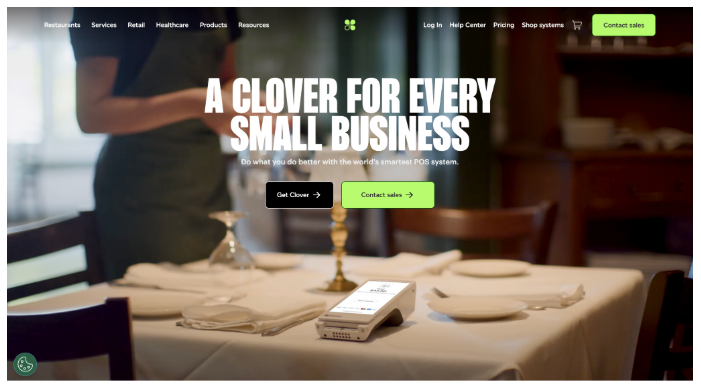
Where Does Clover Operate and What Is Its Purpose?
Clover is an Android-powered POS platform founded in 2010 and headquartered in Sunnyvale, California. The company processes more than 2 billion transactions annually across the U.S. alone, which puts it in a different league from most competitors by sheer scale. The platform covers payment processing, inventory tracking, and staff management, with dedicated software packages for counter service and table service restaurants. Its open App Marketplace is one of the more flexible features out there, letting operators build out exactly what they need without being boxed in.
What's Clover's Edge in POS Systems For Restaurants?
Clover addresses the problem of rigid POS configurations that can't flex as a restaurant's needs change, giving operators an open ecosystem that adapts rather than locks them in. The Android base also means hardware costs stay manageable (think practical, off-the-shelf devices rather than proprietary equipment with inflated replacement costs).
The Review Roundup:
Clover's industry recognition, including a gold medal at the PYMNTS Innovator Awards and a FinTech Breakthrough Award, tracks with what operators report: a dependable, flexible system that works across different service models. The App Marketplace gets consistent praise from operators who want to customize without switching platforms. And 2 billion-plus transactions a year build real confidence that the system holds up when volume spikes.
3. Soft Touch - Best for Restaurant POS and Payment Processing
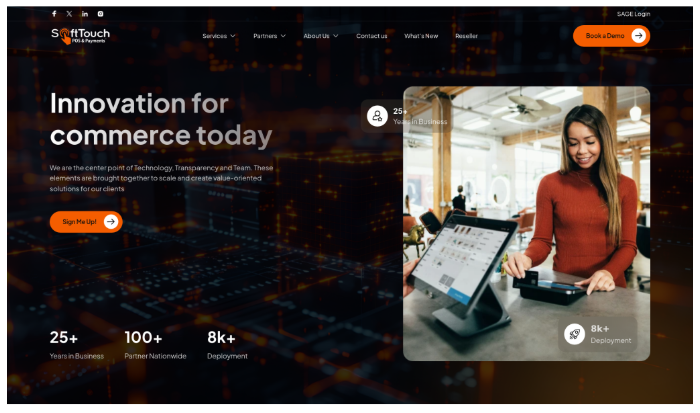
Where Does Soft Touch Operate and What Is Its Purpose?
SoftTouch has been building POS and payment processing systems for restaurants for over 25 years, covering everything from quick-service counters and pizza delivery operations to bars and upscale dining rooms. With more than 8,000 deployments through their SAGE reseller network, the company brings a depth of field experience that newer platforms simply don't have yet. Their focus on screen ergonomics and user-friendly design reflects an understanding that high staff turnover is a real operational cost, and that a system no one can figure out during a rush creates more problems than it solves.
What's Soft Touch's Edge in POS Systems For Restaurants?
SoftTouch solves the configuration mismatch problem that hits multi-concept operators, offering purpose-built setups for QSR, bar, and fine dining rather than forcing every restaurant into one generic template. That kind of segment-specific design, backed by over two decades of deployment experience, tends to result in lower retraining time and fewer order errors on the floor.
The Review Roundup:
Testimonials from owners and CEOs consistently point to responsive support, competitive processing rates, and real improvements in day-to-day operations. The SAGE reseller network earns specific praise for the level of hands-on guidance provided during setup. Endorsement by organizations like the International Casual Furniture Association adds a layer of credibility that's not common for POS providers.
4. Shift 4 Dine - Best for Full-Service Restaurants and Multi-Location Restaurant Groups
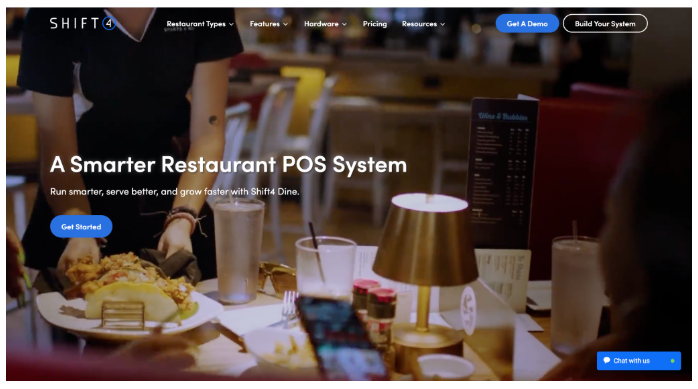
Where Does Shift4 Dine Operate and What Is Its Purpose?
Shift4 Dine is an all-in-one restaurant POS platform backed by Shift4, which has more than 25 years of commerce technology experience and processes over $260 billion annually for more than 200,000 customers. The restaurant-side platform covers POS software, hardware, and payment processing in one package, with purpose-built tools including tableside ordering tablets, kitchen display systems, self-service kiosks, and a restaurant command center terminal. A nationwide certified technician network handles onsite installation and service, which removes a lot of the friction that comes with managing multiple vendors across multiple locations (not cheap, but worth it for operators running multiple units).
What's Shift 4 Dine's Edge in POS Systems For Restaurants?
Shift4 Dine takes on the fragmented-vendor problem directly. Operators juggling separate contracts for software, hardware, and payments get all three rolled into a single relationship, with a lifetime hardware warranty and free replacements included. For multi-location groups where system crashes at any one location mean real revenue loss, that kind of consolidated accountability changes the risk calculation significantly.
The Review Roundup:
Operators running multiple locations call out the system's ability to keep operations consistent across sites while still saving money on the overall cost structure. The 24/7 in-house support team gets mentioned frequently as a real differentiator, especially among operators who've been burned by slow vendor response times in the past. The lifetime hardware warranty doesn't hurt either.
5. Toast - Best for Independent and Small Restaurant Chains
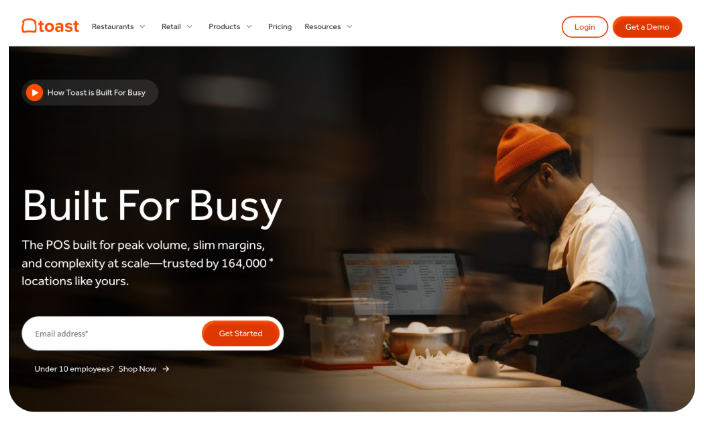
Where Does Toast Operate and What Is Its Purpose?
Toast was founded in Boston in 2011 and has grown into one of the most recognized names in restaurant POS technology. The platform is built on Android and serves approximately 120,000 U.S. restaurants as of mid-2024, with a feature set that covers point of sale, online ordering, email marketing, inventory management, payroll, scheduling, and sales reporting. The Toast Router feature keeps the system running on cellular backup if the internet goes down during service. For a busy Saturday night, that kind of failsafe matters more than almost any other feature on the spec sheet.
What's Toast's Edge in POS Systems For Restaurants?
Toast focuses exclusively on restaurants, and that sole concentration shows up in the depth of its app connections (over 200 connections) and in product decisions like the cellular backup that protects revenue during outages. Going public in September 2021 with a market capitalization of roughly $20 billion confirmed that the market sees this focus as a real competitive asset, not just a positioning choice.
The Review Roundup:
Over 21% of restaurants in the U.S. use Toast, and that number reflects something real: operators find the system genuinely easy to train staff on, even with high turnover cycles. The all-in-one approach cuts down the number of separate tools operators need to manage, which reduces the daily friction that comes with running a restaurant on multiple disconnected platforms. The sheer breadth of available integrations is hard to match.
Selection Framework: How Each Pick Was Evaluated
The goal of this research was to identify POS systems that hold up in real restaurant environments, not just systems that look good on a product page. The process moved through five distinct stages.
Baseline Information Compilation
The first step was building a broad list of platforms actively used in food service operations. Sources included restaurant technology directories, operator-focused review platforms, industry publications, and the official websites of companies that appeared repeatedly across multiple channels. The aim at this stage was coverage, not filtration. Every platform that showed up with enough presence to warrant a closer look got added to the working list, regardless of size or market position.
Filtering Candidates Down to Finalists
From that broader pool, platforms were narrowed based on a few practical filters. Options with no verifiable track record in restaurant-specific deployments were removed early. Review patterns across multiple platforms were analyzed to distinguish consistent strengths from isolated positive mentions, and any platform showing patterns of unresolved complaints around system reliability or support responsiveness was set aside. The goal was to arrive at a shortlist where every remaining option had demonstrated real-world staying power.
Claims Undergo Fact-Checking Review
Each platform's marketing claims were cross-referenced against what actual operators reported in third-party reviews, case studies, and forum discussions. When a company claimed faster transaction processing or reduced order error rates, the research looked for operator accounts that either confirmed or contradicted that positioning. Gaps between what a platform claims and what users describe are a reliable signal that something isn't adding up. Only platforms where the claims and the reported experience aligned reasonably well advanced past this stage.
Industry Standing Check
Beyond user reviews, each company's standing within the broader restaurant technology space was assessed. This included award recognition, mentions in industry publications, partnerships with established payment networks, and any original research or data the company had published. Industry standing doesn't tell the whole story, but a platform with zero recognition outside its own marketing materials carries more uncertainty than one that has been evaluated and acknowledged by external sources.
Real-World POS Systems For Restaurants Evidence
The final check focused on practical proof specific to the restaurant context. This meant looking at dedicated service pages for restaurant-specific features, verified reviews from food service operators (as distinct from general retail merchants), and case studies that showed measurable outcomes: transaction volume handled, table turn improvements, or error rate reductions. Platforms that could only demonstrate general merchant success without restaurant-specific evidence were given lower weight. The five companies in this list all passed this stage with clear restaurant-context documentation.
Choosing the Right POS Systems For Restaurants: A Quick Guide
Picking a POS system for a restaurant is different from picking software for any other business. The stakes are higher because the system touches every transaction, every shift, and every customer interaction. Here's what to weigh before committing.
Industry/Domain Experience: Look for platforms built for food service or with a documented history of restaurant deployments. A system designed around restaurant workflows will handle modifiers, split checks, and kitchen routing more naturally than one adapted from retail.
Features and Service Offerings: Match the feature set to how the restaurant actually operates. A quick-service counter needs different tools than a full-service dining room. Confirm that online ordering, kitchen display system, and tableside payment options are available before signing.
Pricing Structure: Watch for hidden hardware costs, payment processing markups, and long-term contract requirements. Monthly subscription cost relative to total revenue processed is a cleaner comparison metric than upfront pricing alone.
Results Measurement: A good POS system should give operators clear reporting on average ticket size, labor cost percentages, and order error rates. If the reporting is shallow, the system can't actually help the business improve.
Industry Knowledge and Compliance: Confirm the platform handles PCI DSS compliance, EMV payment requirements, local tax calculations, and tip reporting accurately. These aren't optional features; they're table stakes for operating legally and protecting guests.
Wrapping Up
The right POS system doesn't just process payments. It shapes how fast tables turn, how accurately orders reach the kitchen, and how well staff performs under pressure. The five platforms covered here each bring something distinct to the table, from Orders.co's AI-driven revenue tools to Toast's restaurant-only focus and Shift4 Dine's all-in-one hardware commitment. As restaurant technology keeps building out smarter automation and tighter integrations, the gap between the right system and the wrong one will only grow wider.

